Do you actually need a rewire?
Not every old installation needs replacing. The condition of the wiring matters more than its age. Modern PVC-insulated cable can last for decades, while a house wired in the 1950s or 1960s may well have reached the end of its life. The most reliable way to find out is an EICR, which tests the installation and tells you what's sound and what isn't.
Signs worth getting checked
- Rubber or fabric-insulated cable, which was common before the 1960s and turns brittle with age.
- A fuse box with rewireable fuses and no RCD protection.
- Round-pin sockets, or sockets mounted on the skirting boards.
- Light fittings with no earth, which is common in older installations.
- Sockets or switches that feel warm, smell of burning or show scorch marks.
- Breakers or RCDs that trip regularly.
Red and black wiring on its own isn't a reason to rewire. The cable colours changed in the mid-2000s, so plenty of perfectly sound installations still use the old ones.
Full rewire, partial rewire or a new consumer unit?
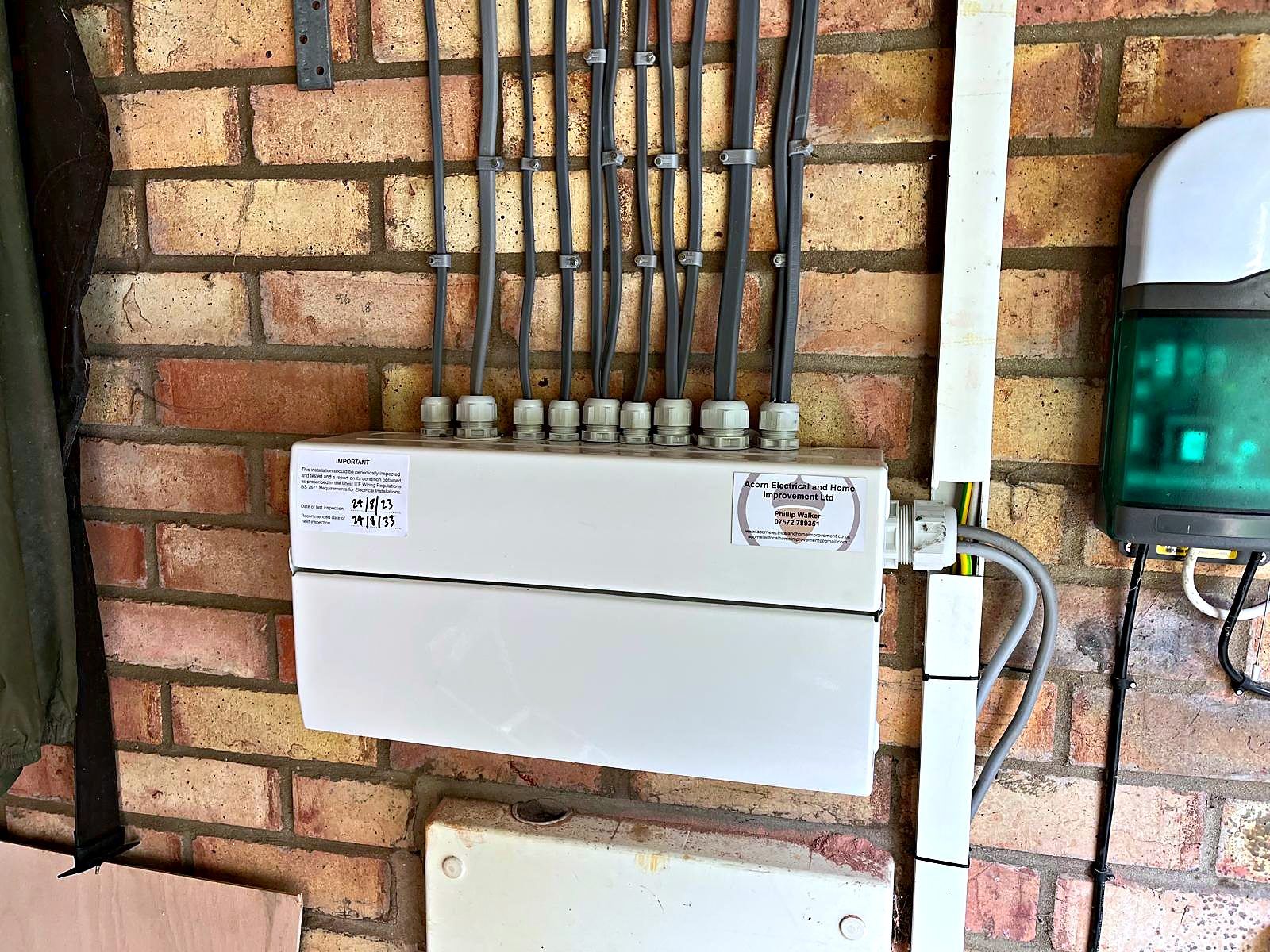
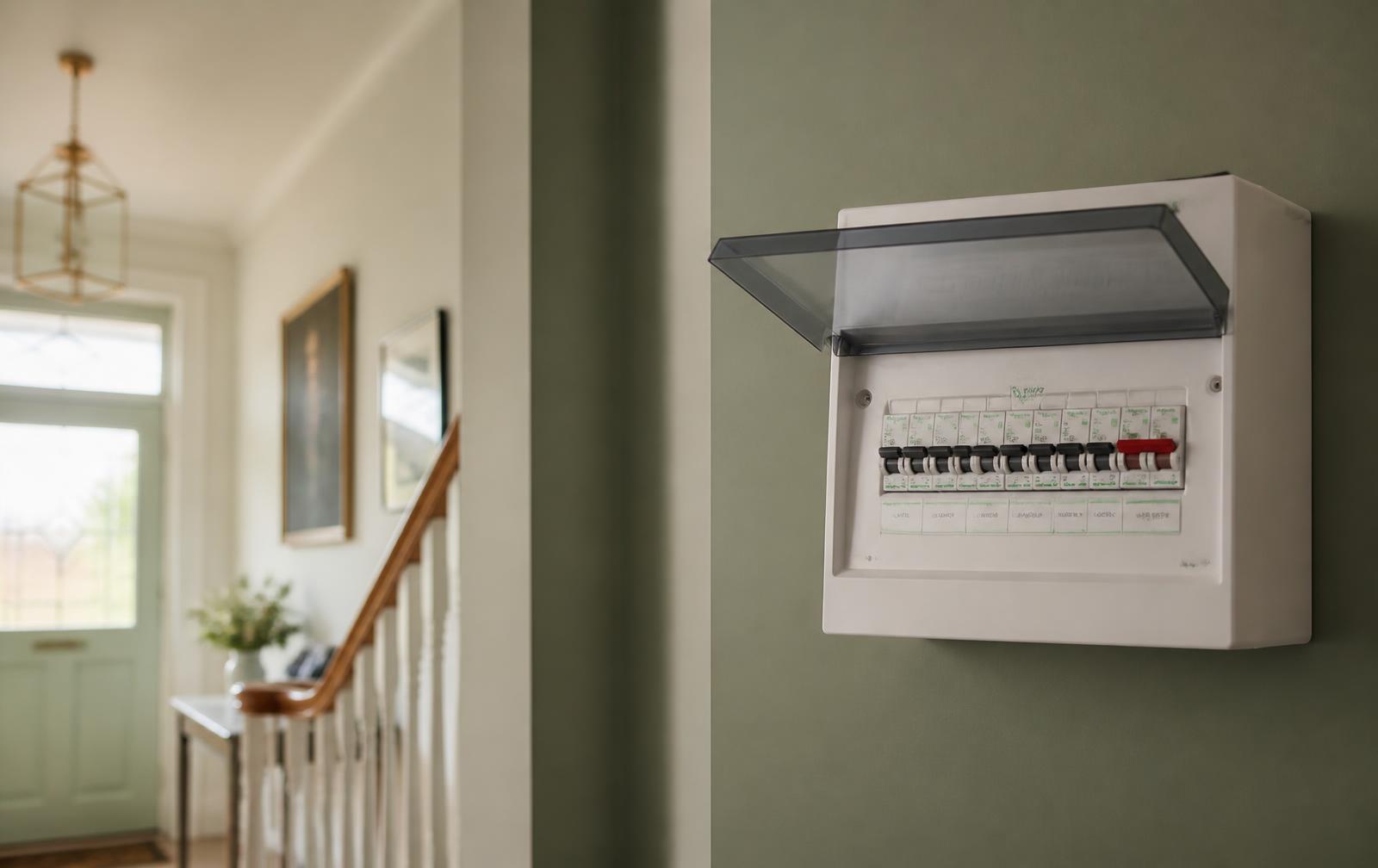
A full rewire replaces every circuit, the consumer unit and usually most of the sockets and switches. A partial rewire replaces only the circuits that have failed or fall short of current standards. Often the sensible answer is a consumer unit upgrade with modern RCBO protection plus remedial work on a few circuits. A full rewire makes sense when the cable itself has failed, when the house is being stripped back anyway, or when an extension or loft conversion changes how the whole house is used.
How long does it take to rewire a house?
As a rough guide, a full rewire of a typical three-bedroom house takes around one to two weeks on site. Flats and smaller bungalows can be quicker. Larger houses and older properties with solid or flint walls take longer. An empty house is always faster than an occupied one, because furniture doesn't need moving and the power can stay off for longer stretches.
First fix
Floorboards are lifted, walls are chased and new cables are run to every socket, switch and light position. Back boxes go in at this stage. This is the dusty, disruptive part, and it takes up most of the time on site.
Making good
Chases and holes are filled and plastered so the walls are ready for decorating. Plaster needs time to dry, which can add a few days between first and second fix.
Second fix
Sockets, switches and light fittings are connected, the new consumer unit is installed and every circuit is tested. On completion you should receive an Electrical Installation Certificate, and the work should be notified to building control under Part P of the Building Regulations.
Can you live in the house during a rewire?
Yes, many people do, and in Norfolk's older cottages and terraces it's often the only practical option. It takes more planning. Working room by room, agreeing which circuits stay live each evening and keeping one room as a clean space makes the work far more bearable. Expect dust, lifted carpets and some days without power for part of the day.
What affects the cost of a rewire?
Every rewire is priced on the house in front of you, which is why a single figure from a website is rarely much use. These are the things that move the price:
- The size of the property and the number of circuits.
- How it's built: solid walls, flint and old lath-and-plaster ceilings take longer to work through than modern stud walls.
- Whether the house is empty or lived in.
- How many sockets, switches and lights you want, and in what finish.
- Extras such as outside lighting, data cabling or smoke and heat alarms.
- Whether making good and redecorating are included in the quote.
When you compare quotes, check that each one covers the same scope, the consumer unit, certification and making good. A cheaper quote that leaves you to arrange the plastering and decorating may not be cheaper in the end.
Plan ahead while the walls are open
A rewire is the best moment to put sockets where you actually need them, add better lighting and plan for things like garden power. Thinking it through before first fix costs nothing, while adding a socket after the walls are decorated means opening them up again. Once the electrics are done, our decorating service can bring the rooms back together.
If you're wondering whether your house needs a full rewire, a partial one or just a new consumer unit, Phillip can look at the installation and tell you straight. Read more about our electrical services in Norwich or ask for a free quote.